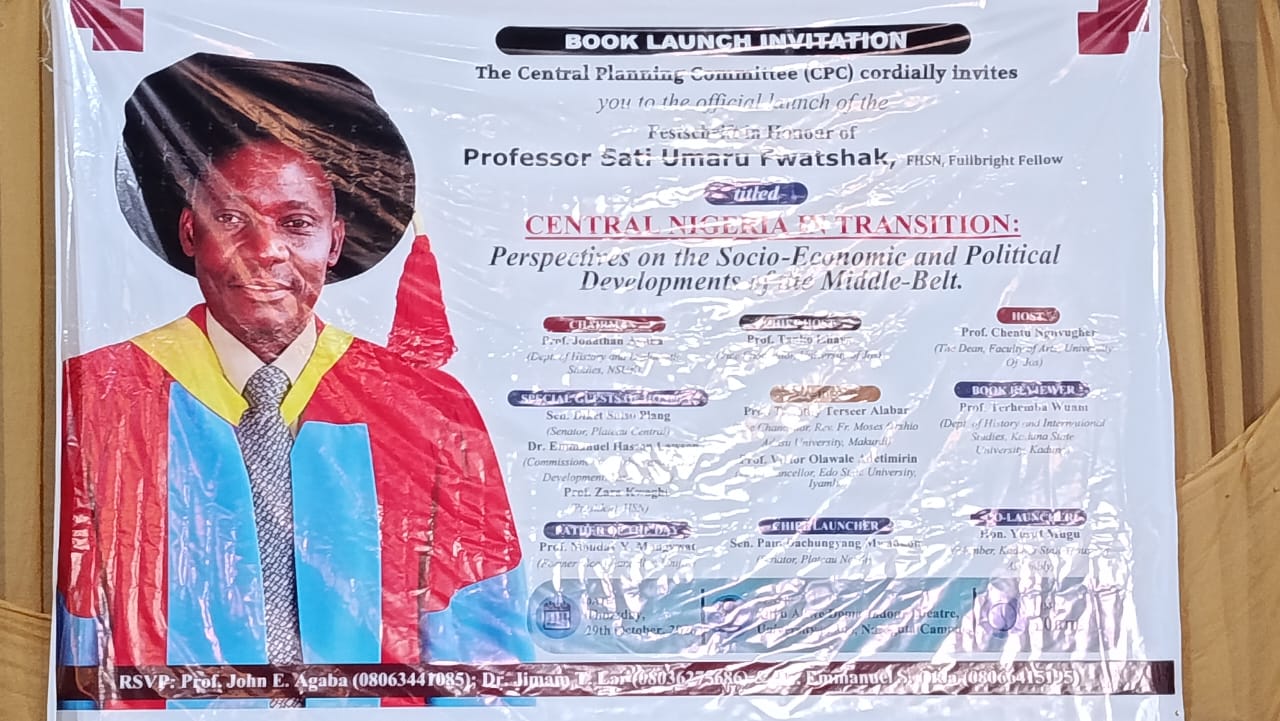
Professor Sati Umaru Fwatshak, an eminent Professor of African Economic and Social History at the University of Jos, has identified systemic greed, both historical and contemporary, external and domestic, as the fundamental driver behind Africa’s ongoing developmental paralysis.
Delivering the University of Jos 133rd Inaugural Lecture titled “The Drift of Certainty and the Lineages of Hope: Contemporary Africa in the Throes of Greed and the Making of Resilient Citizens,” the Fulbright Fellow argued that the continent remains trapped in a persistent cycle of squandered potential.
According to Prof. Fwatshak, contemporary Africa presents a glaring “paradox of unfulfilled development expectations and enduring citizens’ resilience.” Despite possessing vast mineral wealth, fertile agricultural land, indigenous knowledge systems, and a predominantly youthful demographic, the continent continues to contend with poverty, unemployment, inequality, indebtedness, and violent conflicts.
“Successive predictions that Africa would attain significant economic growth with shared benefits within specified periods have all failed to materialise,”
Prof. Fwatshak observed. “From the development expectations of independence through the Structural Adjustment Programs (SAPs) of the 1980s, the projections of the new millennium, and hype surrounding ‘Africa Rising’ era, the central problem has remained the inability to translate economic endowments and opportunities into sustained growth and improvements in the lives of the majority of citizens.”
Tracing the origins of this crisis, the scholar demonstrated that the roots lie in a fusion of external extraction and internal complicity. Historically, transatlantic slave trades, legitimate commerce, and colonial exploitation were steered by European greed, supported by African accomplices.
This entrenched a structural distortion where “Africa’s role in the international system was, and has been, to provide productive raw materials (human beings and agricultural and mineral resources) and to consume imported manufactured products”.
However, the historian refused to lay the blame solely on past colonial subjugation. He held postcolonial political elites squarely responsible for weaponising governance for self enrichment. “The actions and failures of post-colonial governments and peoples also count,” he stated. “
Indeed, the entrenchment of neo-colonialism along with mutually reinforcing internal factors such as corruption, nepotism, personal rule, lack of accountability, inappropriate policy choices, ethnic and religious fundamentalism, and violent conflicts have consolidated inherited disadvantages and obstructed development.”
He warned that such elite greed thrives deliberately on “exclusion or attempts at exclusion, rather than inclusion,” with climate change further complicating the continent’s predicament. Turning to the source of hope, Prof. Fwatshak highlighted African agency, expressed through indigenous innovation, grassroots entrepreneurship, cultural solidarity, and resistance to oppression, as the buffer keeping the continent afloat.
Yet, he cautioned against romanticising sheer survival. “The challenge before continental Africa is to transform resilience from a survival mechanism into an instrument of collective and sustained progress,” he stressed. “Citizens should not have to perpetually demonstrate extraordinary endurance simply to live with dignity.” He emphasised that continental liberation depends on moving beyond rhetoric: “Africa’s future should no longer remain a perpetual promise repeatedly postponed to another generation.” Progress will only materialise when foreign and local greed is checked, and growth is translated into tangible daily welfare through accountable leadership.
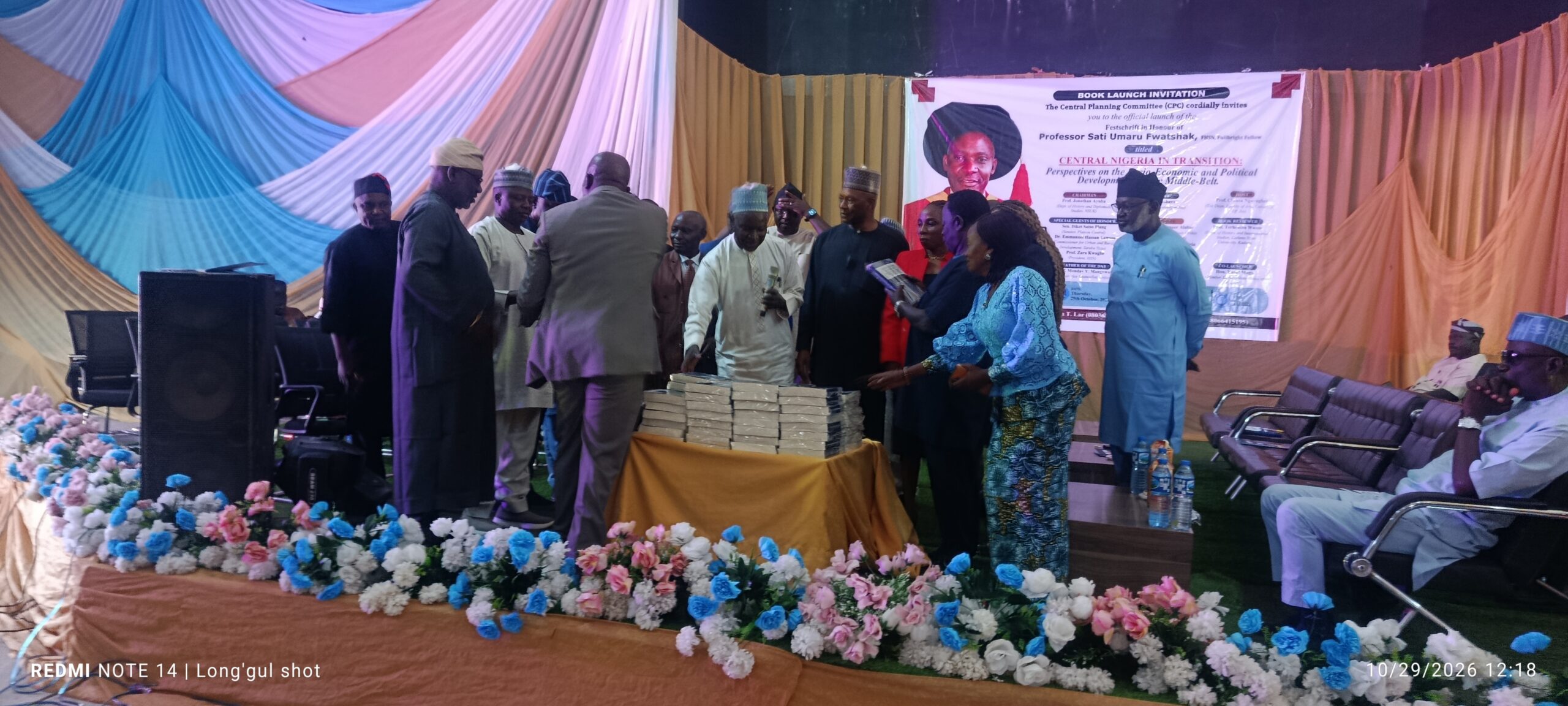
Prof. Fwatshak concluded that dismantling societal avarice requires ethical awakening from within: “Addressing greed in society begins with a personal commitment by individuals, everywhere in the world, to reject greed in their own lives, and then upscale it at the community and wider societal levels… providing a foundation for promoting the common good through integrity, responsibility, accountability, transparency, and a shared sense of humanity.” The academic milestone also coincided with the presentation of a celebratory festschrift published in his honour, titled “Central Nigeria in Transition: Perspectives on the Socio-Economic and Political Developments of the Middle Belt,” recognising his decades of scholarship and mentorship in African economic history.
count | 3


