A note before I begin: I write as an ordinary citizen, a citizen journalist, not as an appointee of the Plateau State Government. I also write as someone with a testimonial stake, because my community has benefited from the rural road network running from Lankan to Kagu and Jipal District. Because the governor’s record covers many different themes, this will be a series, with each part dedicated to one of them. This first installment focuses on roads and infrastructure; the next will turn to education.
Rewriting the Plateau Narrative Through Asphalt and Action

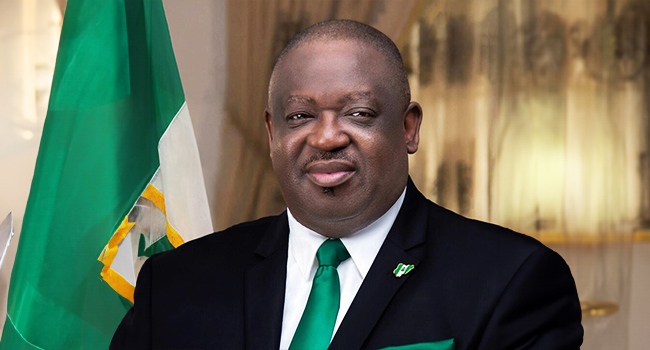
A roaring lion, the African proverb reminds us, kills no game. For too long, Plateau State has heard plenty of roaring: grand speeches that never became motorable roads and promises that faded once the ballots were counted. Today, across Plateau State, a different story is being written. It is the story of Governor Caleb Manasseh Mutfwang, a leader who is defining governance not by lofty platitudes but by the rumble of heavy machinery and the smell of fresh tarmac.
The Mutfwang we need to know is no politician chasing the fleeting thrill of a ribbon-cutting. He is an institution builder confronting systemic neglect head-on, and nowhere is this clearer than in his refusal to accept Nigeria’s wasteful culture of project abandonment.
“Do not look where you fell, but where you slipped,” goes another African saying. On taking office, his administration found 45 abandoned road projects across the state. The usual playbook for an incoming Nigerian government is to dismiss its predecessor’s unfinished work and award new vanity projects to feed political patronage. Mutfwang tore up that playbook. Putting the public purse first, his government took over and revived 32 of those dilapidated projects and added 10 new, high-priority corridors. These 42 interventions span all 17 local government areas, turning Plateau into one vast, coordinated construction site.
Nor is this an administration playing to the urban elite. Rain, the proverb tells us, does not fall on one roof alone, and development on the Plateau is reaching every senatorial district.
Northern Zone (six LGAs): Urban centres and agrarian fringes alike are being reborn. The Rukuba–Miango–Farin Lamba road (55.23 km), Bassa–Binchi–Buyo (49 km) and Tahoss–Ganawuri–Dahreng–Koronfang (27 km) are reconnecting communities cut off by years of decay. In the Jos metropolis, the Jos Masterplan is being restored along more than 29.6 km of township roads, including Rantya, Kangang, Fajib and Rwanje-Dong. Expanded solar street lighting is also supporting night-time trade and a renewed sense of security.
Central Zone (five LGAs): The state’s food basket is getting the market corridors it has long deserved. Mangu–Bwai–Mushu (17 km) and the Panyam Fish Farm Road are nearing completion, alongside longer routes such as Mangu–Gindiri–Lere (45.5 km) and Kuba–Tenti–Manguna–Daffo (66.2 km). Lankang – Kagu-Jipal Road. The rural farmer’s sweat need no longer be lost to post-harvest decay on impassable roads.
Southern Zone (six LGAs): Agricultural and mineral corridors are opening up on a scale unseen in recent memory. Longvel–Yelwa–Mato Junction and Demshin–Dadin Kalong (84.49 km), Dokan Tofa–Baap–Kurgwi and Jibam–Dokan Kasuwa (61 km), and the Mabudi–Zamko corridor (33 km) are steadily ending the isolation of farming communities. With vital bridges such as Gyang–Kip and Gwiilawan Kogi, the south is moving from a neglected outpost to a vibrant commercial gateway.
Yet the true measure of the Mutfwang vision goes far beyond asphalt. Roads are merely the skeleton; the flesh lies in their social and economic returns.
The ₦34 billion Langtang North Dam addresses long-term water security. Cooperative models for artisanal and strategic mining are reclaiming Plateau’s mineral wealth for the grassroots. Federal collaborations, from Akwanga–Jos to Mararaban Jama’a–Mangu–Kanke–Shendam–Ibi, are helping Plateau reclaim its historic place as the premier transit, tourism and logistics hub linking the North-Central to the wider federation.
Governance is, ultimately, a contract of trust. No road erases the grief of communities that have suffered attacks, and no honest account of Plateau can pretend otherwise. But when citizens see a leader who places unfinished public assets above ego and balances rural connectivity with urban renewal, confidence can begin to replace cynicism. He also understands that security depends in part on lit streets and accessible roads.
However long the night, the African proverb assures us, the dawn will break. This is the Caleb Mutfwang that Plateau, and indeed Nigeria, needs to know: a quiet reformer who lets the graders do the talking, whose compass is set by community impact, and who is methodically proving that, with vision and political will, governance can truly work for the people.
Next in the series: education.
Dakwom M. Longgul, PhD, is a citizen journalist and resident scholar at the University of Jos, Nigeria. A DAAD Fellow, he directed Wake the Flies, a documentary that tells the story of the Jos conflict from a humanitarian perspective, first premired in Frankfurt-Germany and screened in the USA, Jos and Abuja. Email: dakwomlonggul@gmail.com.
count | 3


