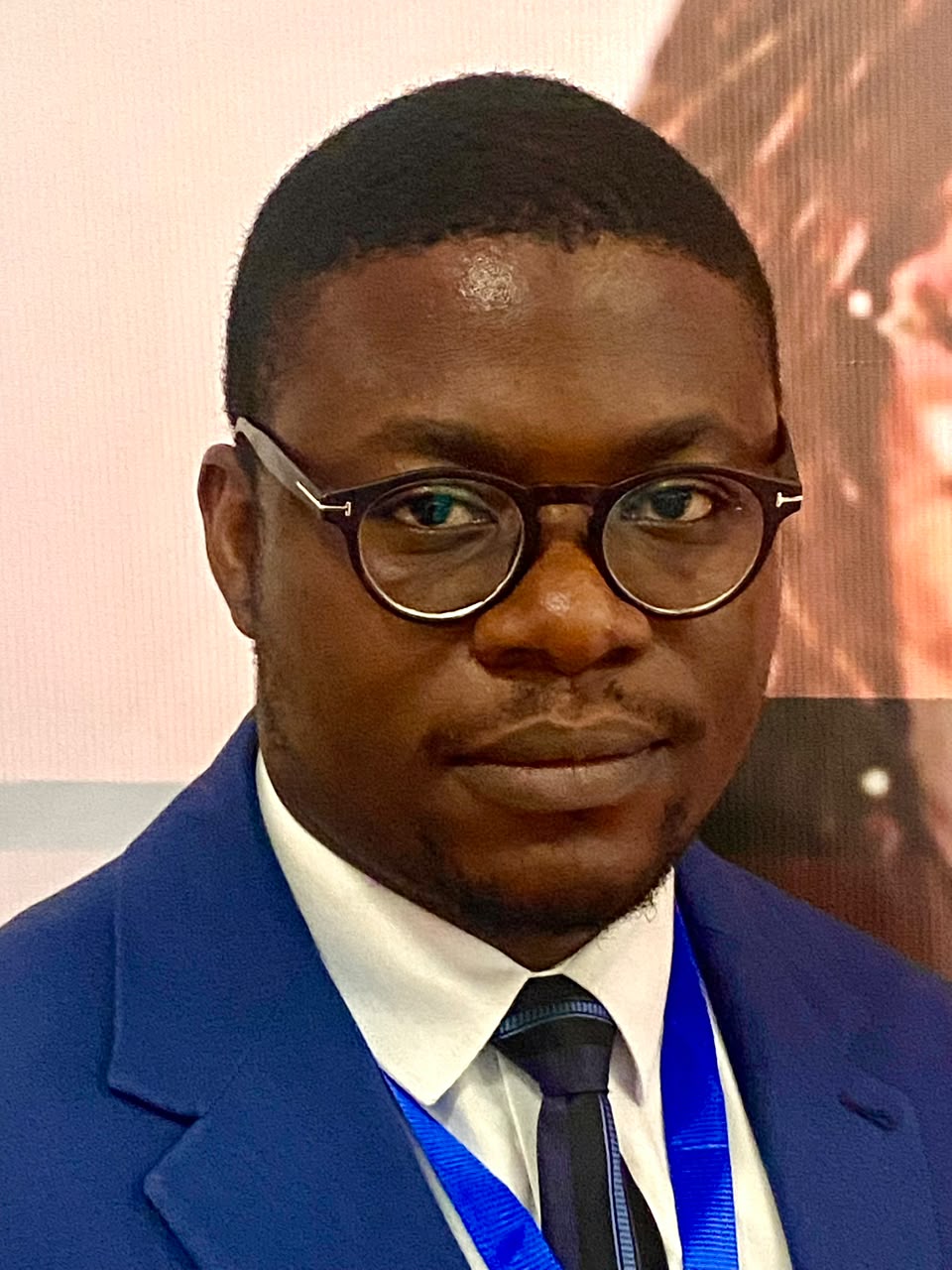
Beyond the Crisis, will Jos rise again? By Muntasir Adamu Kanam
Some dreams disappear almost as quickly as they come. You wake up, stretch, brush your teeth, and by the time breakfast is served, they have completely vanished from memory. Others refuse to let go.
A few days ago, I had one of those dreams.Three days after it happened, I was still thinking about it. Not because it was mysterious or supernatural, but because it felt painfully believable. It mirrored a reality that thousands of people have lived through, even though I experienced it only in my sleep. In the dream, I was walking home in Jos.
I was born and raised in Jos, and anyone who has spent a significant part of their life in the city understands the uneasy atmosphere that settles over the town whenever rumours of violence begin to spread.
Before social media, rumours travelled from market to market and from neighbourhood to neighbourhood. Today, they spread through WhatsApp in seconds. Either way, fear arrives long before facts.People begin making hurried phone calls. Parents start looking for their children.
Shop owners quietly lower their shutters. Commercial drivers abandon certain routes. Everyone asks the same question: What exactly has happened?
In my dream, I found roads blocked by groups of anxious young men. Unknown to me, there had reportedly been an attack somewhere in the city. Nobody seemed interested in verifying the information. Fear had already become fact, and anger had quickly replaced reason.Then I was stopped. The young men said Christians had been attacked and that they wanted revenge. Initially, they did not realise I was a Muslim. Instinctively, I tried to hide the prayer mark on my forehead, hoping to avoid unnecessary attention. But one of them noticed. “He has a prayer mark,” he shouted. “He’s one of them.” Within seconds, I went from being an ordinary passer-by to an enemy.
I immediately began to plead.I told them my father is Bogghom from Kanam Local Government Area. My mother is Berom from Jos South. Plateau State is my home. I grew up on its streets. I attended school here. I have friends and family across religious and ethnic divides. In my mind, these facts should have mattered. They did not. The mob had already reached its conclusion. Just as I thought my life was about to end, I woke up. My heart was racing. It took me several minutes to convince myself that I was safe in my bedroom and that nothing had actually happened.
But something had happened. The dream forced me to confront an uncomfortable truth: in moments of communal violence, individual identities often disappear. People stop seeing neighbours and begin seeing labels. They stop asking, “Who are you?” and begin asking, “Which side are you on?”That is one of the greatest tragedies of conflict. A few days later, I met my friend Chinonso, who was born and raised in the Busa Buji area of Jos North. As we spoke, I remembered my dream and narrated it to him. His response was sobering. He told me about what his family experienced during previous crises in Jos. His brother narrowly escaped death during one attack. His mother survived a bomb explosion around the Murtala Mohammed way. Houses in their neighbourhood were burnt. Fear eventually forced the family to relocate in search of safety.As I listened, one thought would not leave my mind. What I experienced for a few terrifying minutes in a dream has been the lived reality of countless families. Some lost parents. Some lost children. Some lost businesses built over decades. Some lost neighbours they had known all their lives. Others lost something even more difficult to restore—the confidence that tomorrow would be better than today. Perhaps that explains why the scars of conflict remain visible long after the gunshots have stopped.Not long afterwards, I watched a video posted by a foreign tourist who had just visited Jos for the first time. She could barely contain her excitement. She marvelled at the cool weather, the spectacular rock formations, the peaceful scenery, the hospitality of the people and the unique charm of the city. Watching her reminded me of the Jos I knew growing up. The Jos where people from every part of Nigeria found a home.The Jos where neighbours celebrated weddings together, exchanged food during festive periods and mourned together when tragedy struck. The Jos where diversity was considered a blessing rather than a threat. Then I asked myself a simple question. How did a city blessed with such extraordinary beauty become known more for conflict than for peace?There was a time when the title “Home of Peace and Tourism” was not merely a slogan. It reflected reality. Jos was one of Nigeria’s most beloved cities Its temperate climate attracted visitors from across the country. Tourists came to enjoy the scenery. Families came during school holidays. Educational institutions attracted students from every region. Businesses flourished because people believed the city offered opportunities and stability.Many older Nigerians still remember those years with nostalgia. Unfortunately, younger generations know a different Jos. For many of them, the city exists primarily through newspaper headlines announcing another attack, another reprisal, another community displaced, another round of condolences. That is deeply unfortunate. Not because the violence should be ignored, it must never be ignored, but because conflict has become the only story many people know about Plateau State.The truth is considerably more complicated. The Plateau crisis cannot honestly be reduced to a simple Christian-Muslim conflict. Nor can it be explained solely through ethnicity. Over several decades, disputes over land ownership, political representation, indigene-settler questions, access to economic opportunities, population changes, criminality and governance failures have interacted in complex ways. Religion and ethnicity often become the identities through which deeper grievances are expressed.Unfortunately, once violence begins, innocent people become statistics regardless of the original cause. Communities that have coexisted peacefully for decades suddenly become suspicious of one another. Markets become divided. Schools become segregated. Friendships become strained. Economic activities decline. Investors stay away. Young people lose opportunities. Entire generations inherit fears they never created. Perhaps one of the greatest casualties is trust. Trust cannot be rebuilt through military deployments alone.Security agencies undoubtedly have an indispensable role. Intelligence gathering must improve. Criminals must be arrested and prosecuted without bias. Communities deserve equal protection regardless of religion or ethnicity. But sustainable peace requires something deeper. It requires rebuilding relationships. It requires creating spaces where communities can listen to one another instead of merely speaking at one another. It requires acknowledging genuine grievances while rejecting violence as a means of addressing them.Traditional rulers remain critical. Religious leaders remain influential. Community associations remain relevant. Civil society organisations remain indispensable. Each has a role that government alone cannot perform. Young people also deserve special attention. Too often, they become instruments in conflicts planned by others. Idle hands remain vulnerable to manipulation. That is why investment in education, skills acquisition, entrepreneurship and employment is not merely an economic policy, it is also a peace-building strategy.A young person with hope is less likely to become a recruit for violence. Equally important is the role of the media. Bad news naturally attracts attention. That is the nature of journalism. However, if all we ever tell about Jos is violence, we inadvertently reinforce the perception that conflict is its defining identity. It is not. The city continues to produce remarkable professionals, entrepreneurs, artists, academics, athletes and innovators. Communities continue to coexist peacefully in countless neighbourhoods that never make the headlines.Farmers continue to cultivate fertile land. Tourism sites remain breathtaking. Creative talents continue to emerge. These stories deserve attention too, not as propaganda but as part of a balanced picture. There is also an economic argument that cannot be ignored. Peace pays. Every peaceful society becomes more attractive to investors. Hotels become busier. Restaurants expand. Transport services grow. Property values increase. Tourism creates employment. Agriculture thrives. Small businesses flourish. Government revenues improve. Everyone benefits.Conflict, on the other hand, impoverishes everyone. The investor who decides against establishing a factory in Plateau State because of insecurity does not only deny himself profit. He denies young people jobs. The tourist who chooses another destination because of fear does not only cancel a holiday. Local businesses lose income. The family that relocates because they no longer feel safe takes with them skills, investments and social capital. Violence is therefore not merely a security challenge. It is an economic tragedy. It is a developmental tragedy. It is a human tragedy.Yet, despite everything, I remain optimistic. Perhaps optimism is itself an act of courage. History reminds us that cities recover. Countries recover. Communities recover. People recover. Recovery is never automatic, but it is always possible. Jos possesses everything required for renewal: resilient people, abundant natural beauty, cultural diversity, agricultural strength and enormous tourism potential.What remains is the collective determination to protect peace with the same energy that conflict has often consumed. My dream was fictional. The fears it reflected were not. Many families still carry memories they would rather forget. Many graves still remind us of mistakes we must never repeat. But the future does not have to resemble the past. I still believe the phrase “Home of Peace and Tourism” can once again become more than a nostalgic slogan. It can become reality.The responsibility belongs to all of us—government, security agencies, traditional institutions, religious leaders, community organisations, the media and ordinary citizens. One day, I hope that when someone anywhere in Nigeria mentions Jos, the first images that come to mind will not be those of conflict.Instead, they will think of cool evenings after the rain. They will think of majestic rock formations. They will think of colourful cultural festivals. They will think of hospitality. They will think of opportunity. They will think of peace. That is the Jos I grew up loving. That is the Jos I still believe in. And that is the Jos worth rebuilding for ourselves, for our children, and for generations yet unborn.
count | 138


